


If you’ve ever felt out of control around food, cycling between periods of bingeing and then restricting yourself, you’re not alone. This is what’s known as the binge-restrict cycle, and it’s more common than you probably think.
The binge-restrict cycle affects people with and without diagnosed eating disorders.
Let’s talk about what this cycle looks like and why it happens, because it has nothing to do with having enough willpower or discipline like you might believe.
What is the Binge-Restrict Cycle?
The binge-restrict cycle is a pattern of eating where a person overeats or binges, which then triggers more restriction, often out of a sense of shame.
It often plays out like this:
- Binge eating occurs
- Individual feels shame for overeating
- They promise to themselves to “do better”
- Individual restricts their food
- Fixation on food/body
- Emotional and/or physical hunger (trigger)
- Binge eating happens again
Sound familiar?
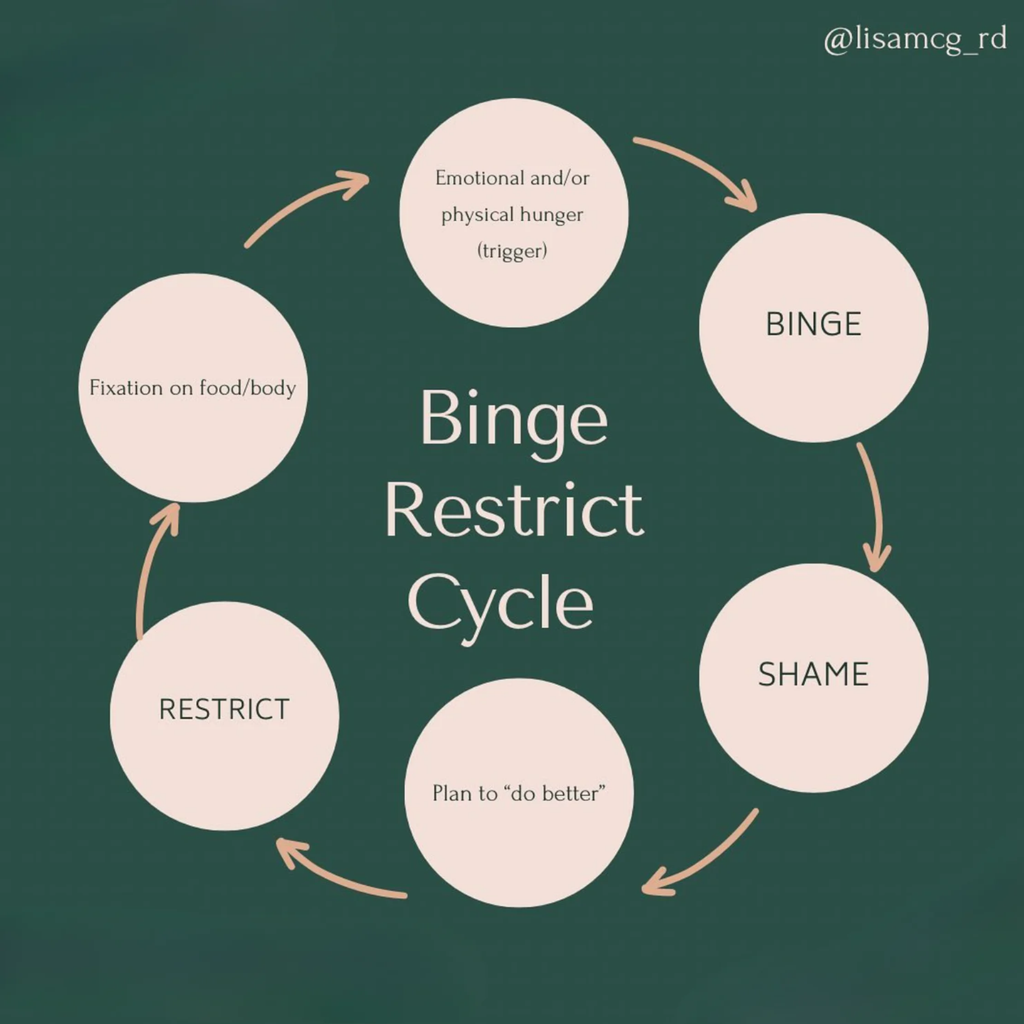
Restriction causes the body to release more of the “hunger hormone” to communicate that it NEEDS food. The longer the restriction goes on, the more intense the hunger cues can become — often driving another binge session. It becomes a self-perpetuating cycle that can be very hard to break free from.
Stuck in a Binge-Restrict Cycle? Here’s Why It Happens
If you’re stuck in a binge-restrict cycle, know that it’s SUCH a common experience — way more common than most people think. It’s driven by an interconnected loop of physiological and psychological drivers that trigger more bingeing after restriction.
Physiological drivers
→ Food deprivation and under-fueling
When you aren’t giving your body what it needs, your brain interprets it as a threat to your survival. Your body doesn’t have a way to differentiate between starvation and self restriction, so it reacts by releasing hormones that trigger intense drives to eat.
→ Blood sugar dysregulation
Inconsistent eating patterns like the binge-restrict cycle can create significant fluctuations in your blood sugar. If you have a long gap of not eating after a binge, your blood sugar drops, which can manifest as intense cravings and a strong desire to eat.
→ Poor or disrupted sleep
Not getting enough good quality sleep affects your appetite-regulating hormones, which can increase hunger and lower impulse control. This often leads to episodes of night bingeing.
→ Genetic predisposition
Your unique genetic blueprint also plays a factor. Some individuals are just more likely to fall into the binge-restrict cycle than others. Neurodivergent individuals may also be more likely to be affected by binge eating, especially those with ADHD (which is typically categorized by impulse control issues).
Psychological drivers
→ Negative feelings and emotional distress
Emotions are one of the most common triggers for people who binge, as it often serves as a maladaptive coping mechanism. Bingeing can feel like a way to numb or “escape” emotions like anger, loneliness, sadness, or boredom for some people.
→ Body image dissatisfaction
Having a negative body image can also drive some people to binge. Someone feels shame about their weight or appearance of their body, so they turn to food for comfort. Then they feel even worse about themselves, which creates a cycle of binge eating and shame.
→ Diet mentality and all-or-nothing thinking
If you’re following a specific diet or have established rules for food that you feel like you “have” to follow, then you break them, it can feel like eating is “ruined.” This can create a situation where you feel like you’ve already failed, so you ditch any and all control.
Breaking the Binge-Restrict Cycle
Even if you don’t identify with “bingeing”…feeling like you can’t trust yourself around certain foods fits into the same cycle.
Breaking the cycle isn’t easy, but it’s possible. Here are some tips:
- Just because you binged, “overate,” feel guilty, or don’t feel hungry following a binge — break the cycle by not skipping any meals or snacks.
- Don’t compensate through exercise or other behaviors. This just continues the cycle.
- Challenge the negative self-talk and shame with compassion and grace. I know, easier said than done! But you deserve it, and the shame only perpetuates the cycle.
If possible, it’s a good idea to work with a non-diet dietitian for support.
As an eating disorder dietitian, I have years of experience helping clients break out of this vicious cycle. I believe your relationship with food doesn’t have to feel tumultuous, which is why I approach nutrition care with a mix of professional expertise and a good dose of humor.
Book your nutrition counseling session and let’s put peace back on your plate. Located in California and serving clients via telehealth in 14 states.


This is NOT the kind of blog that tells you what to eat.

As an eating disorder dietitian, I'm so much more interested in WHY you eat and how you feel about it than the "what" of it all — so if feeling more grounded around food (and maybe even enjoying eating again...???) is your vibe, I'm glad you found your way here.

